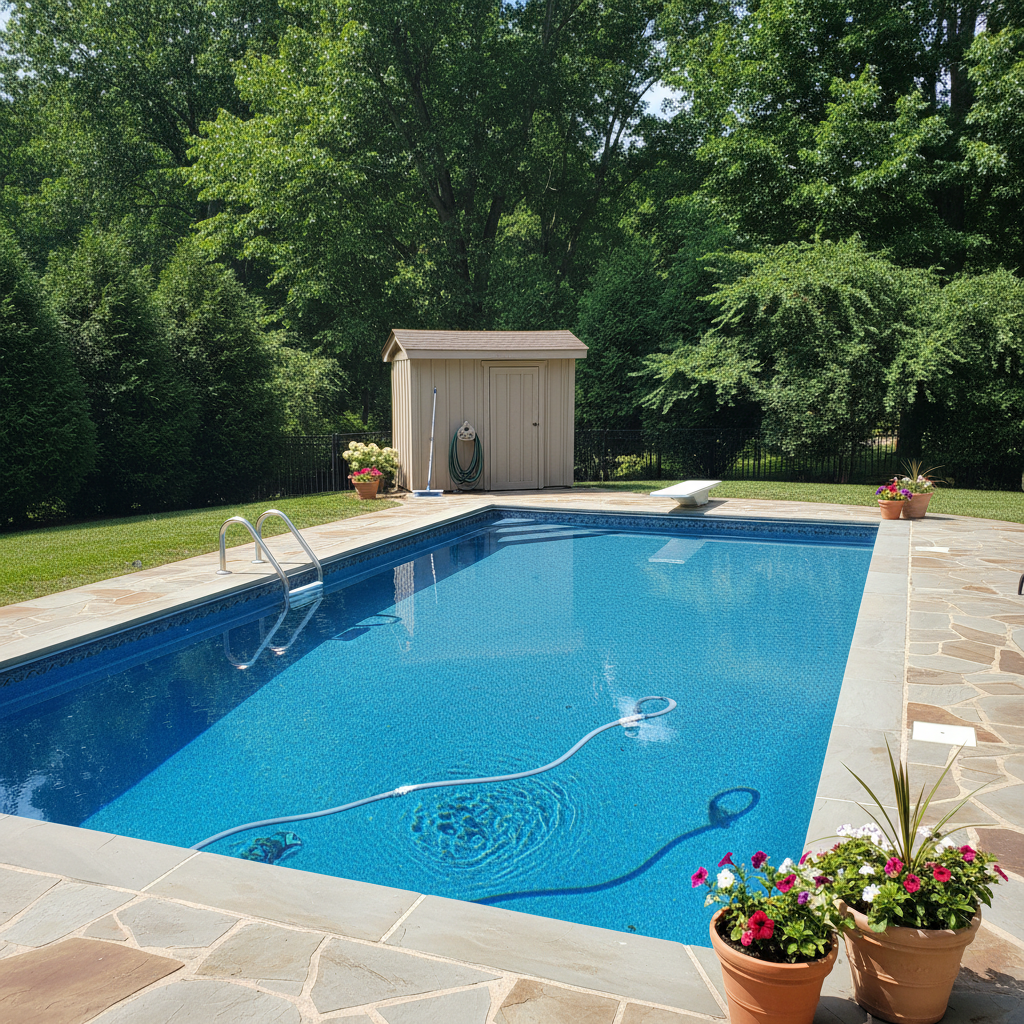
Ever watch a thick layer of yellow oak pollen coat your backyard overnight every spring? If you live around Sequoyah Hills or out in Farragut, you already know East Tennessee trees love dropping everything they have right into our pools. Managing a pool around here means working with our specific regional climate instead of fighting it. Apex Pool & Tennessee sees what happens when weather changes catch Knoxville homeowners off guard.
Spring Startup: Beat the Heat Before It Starts
Most homeowners wait until the first 85-degree day in May to pull the cover off. That is usually too late. Once water temperatures creep past 60 degrees, algae wakes up fast. You will want to get ahead of it by opening your pool in early to mid-April while the air is still crisp. Spring rains in Knox County can also throw your pH and alkalinity completely out of balance overnight. Test your water early, get the chemistry balanced before dumping in massive amounts of shock, and save yourself a green backyard mess.
Summer Maintenance Under Tennessee Humidity
July and August bring that heavy Southern humidity paired with intense afternoon thunderstorms. All that warm moisture acts like an incubator for algae blooms. You cannot just set your pump timer for April and forget it until September. When we get those week-long heatwaves, your sanitizer burns off much faster. Run your pump a little longer during peak heat, keep a close eye on your chlorine levels, and brush the walls weekly to keep buildup from taking hold.
Fall Cleanup and Winter Defense
Fall in East Tennessee is gorgeous until those maples and oaks drop millions of wet leaves right onto your pool surface. Leaving organic matter to rot on your liner all winter is a quick ticket to permanent staining. Make sure you clear out the skimmer baskets regularly and drop your winter cover on securely before the first hard freeze hits. Winterizing around here is not just about putting a tarp over the water. If you leave water in your plumbing lines when a sudden January freeze drops temperatures into the teens, those PVC pipes will crack. Blowing out the lines and adding proper winter plugs protects your hardware so you do not face a massive repair bill when warm weather returns. Staying proactive through every shift in the local calendar keeps your pool ready for the next swim season without the headache.